Thursday, January 13, 2022

The Worst Time To Prune Grapes


Grape vine pruned


A recent post by the North Carolina Cooperative Extension Henderson County Center warns us about "The Worst Thing You Could Do to Grapes in Unseasonable Warm Winter Weather." The worst thing is to begin pruning too early.

"Pruning helps to stimulate vine growth. You may see grape buds in some degree of bud swell, particularly the European bunch grape varieties. Those varieties have very little chilling requirement that can be met in a few cold days. 

"A short cooling pattern will do little to harden the vines and buds for any potential cold weather in January or February. A precipitous drop (30-40°F) in temperatures after warm weather can cause a lot of damage.”

It's a warning we should heed. But wild fluctuations in weather patterns can catch us by surprise. Just when we think it's cold enough to prune safely, a significant rise in temperatures can initiate bud swell. Then - BAM - a deep drop in temperature causes a whole lot of damage. Not only are buds frozen, but entire vines can be wiped out by the cold. 

Those of us who have several acres planted in grapes are bound by the calendar and seasons, so we have to have our vines pruned within a particular time frame. We do the best we can. 

The best advice is to check the long-range weather forecasts before beginning the pruning operation.

Return to GoGardenNow.com.

Friday, July 30, 2021

Leaf Spots on Strawberries?


Photo Credit: UF/IFAS GCREC


"What can be done to manage the disease which can cause leaf spots on strawberry plants? Natalia Peres, a Professor of Plant Pathology at the University of Florida/IFAS Gulf Coast Research and Education Center, said the first management tactic focuses on proper sanitation."

Read more.

Wednesday, February 24, 2021

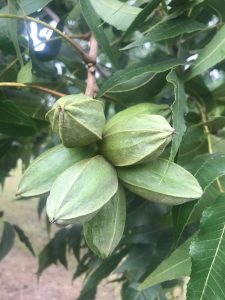
New Lakota Pecan Variety Looks Promising

Photo by Lenny Wells/UGA: Shows Lakota pecans.


According to Vegetable and Specialty Crop News, "one pecan variety could be a valuable option for producers seeking a low-cost input variety to plant. Lakota is a low-input variety where producers don’t have to spray much to manage it throughout the season. It has thrived in research trials on the University of Georgia (UGA) Tifton campus, according to UGA Cooperative Extension pecan specialist Lenny Wells. 'The yields on Lakota have been very impressive.'"

Read more about it!

Return to GoGardenNow.

Tuesday, February 16, 2021

What will happen to the American blueberry growers?


It appears that the commercial American blueberry grower could be put out of business. Charles Hall of the American Blueberry Growers Alliance notes that blueberry imports have grown 2000% from 2009 to 2019. Foreign growers can produce them cheaper with "$10 a day labor." Market prices have dropped. American blueberry growers can't compete. But the International Trade Commission says that isn't a problem.

Read more about it.

https://vscnews.com/itc-blueberry-imports-verdict/

On top of that, the Biden administration and the Democrats in Congress want to raise the U.S. minimum wage to $15 per hour.


Tuesday, December 24, 2019

What is this thing?


The National Garden Bureau has introduced a charming little fruit for gardeners. But what exactly is it?
Is it a cucumber? Is it a melon? This adorable fruit looks like a watermelon for fairies, but it tastes like a cucumber with tangy citrus overtones. Loads of tiny, one-inch fruits appear on vigorous vines. Delicious eaten fresh from the garden as snacks or in salads, you can also pickle these cuties to enjoy later. If you garden with kids, make sure to add Cucamelon to your beds. Also known as a mouse melon, this fruit makes an ideal addition to tea parties with fairies.
It looks like something my granddaughter would enjoy growing!

Monday, December 23, 2019

Current Data Shows Glyphosate Is Not Linked to Cancer


Weed spraying


According to Jason Ferrell, director of the Pesticide Information Office with the University of Florida Institute of Food and Agricultural Sciences (UF/IFAS),  "Currently, the data we have does not seem to indicate that glyphosate causes cancer. So we still believe that it can be used as an effective part of an integrated pest management strategy and plan.”
Glyphosate is the active ingredient in Roundup®, one of the world's most popular herbicides. However, since 2015 when the International Agency for Research on Cancer (IARC) reclassified glyphosate, the active ingredient in Roundup®, as a probable carcinogen, public concerns have intensified. Many other agencies around the world began studying its safety.
So far, “All of the other world agencies — and there have been several — have not classified it as a probable carcinogen and they don’t believe there is a clear link between glyphosate and cancer with the current data that we have," says Ferrell.
The bottom line, then, is that the International Agency for Research on Cancer (IARC) is the only world agency that classifies glyphosate as a probable carcinogen, in stark contrast to the study results from all the others.

Sunday, April 7, 2019

National Garden Bureau Announces 2019 Is The Year of the Pumpkin

Pumpkin Howden - Credit National Garden Bureau

The National Garden Bureau has declared 2019 as The Year of the Pumpkin. With that announcement comes a whole lot of useful information, history, and growing tips about pumpkins. We think you'll enjoy reading about it.

Return to GoGardenNow.com

Thursday, October 11, 2018

FAQ: How to care for muscadines and blackberries

Q. I live in north Alabama and purchased a house in March that has an existing small muscadine and scupadine orchard that is irrigated. 5 rows about 35-40 feet each in length. I was told last year they harvested over 600 lbs. of muscadines. They produced real well this year, however,  I am not familiar with the best way to care for them and want to make sure they continue to produce.  When and what do I need to fertilize with?  How often and how much do I need to water?  Do I need to spray pesticide, insecticides, etc.?   I watched your video on pruning and it seems to be very similar to pruning roses (of which I am very familiar).  In North Alabama would  January or February be the best time to prune and can you prune to much?  It does not appear to me that they have been pruned in quiet sometime.

Also have a row of tame blackberries.  I have the same questions about them.

A. Before fertilizing, take a soil sample to your nearby Cooperative Extension office for analysis. Follow the recommendations. Fertilize only as needed. 10-10-10 is often prescribed. The vines do not need to grow so long as to grow along the ground. Vines 3' to 4' are long enough. Muscadine roots grow close to the soil surface and run a great distance, so broadcast the fertilizer over the area. (Just in case you ever get the notion to roto-till or disc the space between your rows, don't do it.)

Muscadines are drought-tolerant, so irrigation of mature vines is only necessary during extreme drought. Newly planted vines can be irrigated until established. A couple inches of water per week should be sufficient.

Pruning should be done annually without fail. You should be able to begin pruning soon after Thanksgiving. Pruning too much will only reduce the size of your crop; it won't kill the plant. If they haven't been pruned in a long time, you have a lot of work to do. My videos should be instructional in that regard.


Blackberry culture is similar. Have the soil sampled. Fertilize as prescribed. Irrigate a couple of inches per week during dry weather. Prune out old canes annually. Keep weeds out of the rows using a pre-emergent. Post-emergents can damage the canes.

Friday, January 26, 2018

Advice needed on saving a wild muscadine

I took down a tree last Fall that had a large wild muscadine vine growing into it. I was going to clear it too but my wife convinced me to see if we could save it. It took a bit of work but I basically removed branch by branch of the fallen tree, until all that was left was the muscadine. I am wondering if you can give any advice on pruning and training it? 

I'm prepared to build a trellis for it; the usual setup of 9 gauge wire between posts 20' apart. And it should get plenty of sun where it is. But since the vine grew up wild, it isn't in the usual training pattern. The trunk goes about 15 feet before it does anything, and then it branches and splits several times, and the growth is just everywhere. In all it's about 45 feet long. Do you have any advice, especially on how aggressive I should be in removing growth? Thanks! 
 

It would be difficult to advise about exactly how to prune it. That would require a "hands-on" session. It would indeed be difficult to train it to a trellis of any sort without radical pruning.
Since the trunk is bare to 15 feet or so, you might consider a high overhead trellis. Take a look at the image below:

NZ overhead grape trellis


I found this image on TripAdvisor. It's a vineyard in NZ. You can see how wire is strung from post to post, the arms stretched across and the vines closely pruned. Something like this could work if you care to go to the trouble and expense.

I visited a similar system at a fruit experiment station near Shepherdstown, WV about 30 years ago. It was made for apples. Telephone poles supported an overhead wire grid upon which the scaffold limbs were trained in a flat umbrella fashion. The trees were pruned annually by a person who would walk across the top of the grid wearing footwear resembling snowshoes brandishing either a swing-blade or a "string trimmer" outfitted with a circular saw blade. (I tried to find a picture of the Shepherdstown system online, but no luck. Unfortunately, I have no pictures existing from my visit.)

A less interesting but more practical solution might be to cut the plant to the ground during dormancy. It's likely the stump would sprout and you could train one of the young shoots to a convention single-wire trellis.

I hope this helps.


Return to goGardenNow.com.


Wednesday, September 27, 2017

Wednesday, March 16, 2016

At what point do muscadine vines begin to taper off in production?

Our family has a set of muscadine vines that are about 35 years old. They are prolific when pruned yearly. How long should I expect these vines to produce before we cut them down and replant? I saw your video where you pruned 50-year old vines. At what point do vines begin to taper off in production?

There's no particular age at which point vines begin to taper off. As long as they're maintained well, they can live to ripe old ages. The oldest scuppernong, known as the "Mother Vine" growing at Manteo, NC, was estimated to have been over 400 years old. I think it died fairly recently.

Sometimes even with annual pruning, the vines can become overgrown, so need to be renovated, cut back real hard to remove some or most of the old "spurs that" that have grown to look like antlers. You'll lose some production in doing so. I'm in the process of doing some of that now. Some are going strong. I'm removing a few unproductive vines. It's possible that some unproductive vines cut down to the ground will re-sprout from the trunk and give you a fresh, new, productive vine from the old roots.

The vines can certainly outlast the trellises they grow upon.

Return to goGardenNow.com.

Monday, January 18, 2016

What is the difference between a Muscadine and Scuppernong vine?

What is the difference between a Muscadine and Scuppernong vine?  ...Would you suggest I do my major pruning now?
 
Scuppernong is one bronze/white variety of muscadine grape. It was discovered as early as the 1500s by explorers. Eventually, it was rediscovered in the 1750s growing near the Scuppernong River in N.C. Consequently, bronze/white varieties became known as scuppernongs and black or purple varieties known as muscadines, but that is incorrect. There are many varieties of bronze muscadines. All scuppernongs are muscadines, but not all muscadines are scuppernongs.

You can do your major pruning now. Try to be done by the time new foliage begins to emerge. 
 
Return to goGardenNow.com.  

Monday, September 21, 2015

Questions about fertilizing and pruning muscadines


Q. My parents live in Avon Park, FL. They told me that the muscadines didn't make this year and I was doing some research and came across your Youtube videos. Any idea why they didn't make?

A. There could be several reasons for not bearing this year, including late frost, lack of pollination - perhaps a nearby pollinator died, failure to prune for several years, lack of pollinating vectors.

Q. Do my parents need to fertilize the muscadine plants? (10-10-10 fertilizer 6 inches from plant and around the plant) With what and what time of year to add fertilizer.

A. If the plants are not putting on much new growth, they might need some 10-10-10. A soil test might indicate the need.

If the plants have any age on them at all, putting fertilizer 6 inches away from the plant will do little good. The roots are shallow and run a long way. It would be best to broadcast the fertilizer around the plants as much as 3 feet or more. Casting the fertilizer with a gloved hand or a lawn fertilizer spreader will work. Fertilize early spring.

A soil test might indicate the need for magnesium sulfate - Epsom salt. You can broadcast some even without taking a soil test. Epsom salt is like chicken soup for some ailing plants. It might help; it can't hurt.

Q. Pruning what time of year?

A. Prune during dormancy with leaves off the plants so you can see what you're doing. That would be from early December to early March. Actually, you can prune other times of year, too. The problem would be knocking off young flowers and fruit. Muscadines will not "bleed to death."

Q. Who can we call to have someone check out the soil pH and check for diseases of the plants?

A. You can do collect a soil sample yourself. Drop by your closest Cooperative Extension Service office. Request a soil sample bag. Add soil to the bag per instructions usually printed on the bag. Return the sample to the Extension office. You will be charged a nominal fee. The office in Highlands County, FL is at 4509 George Blvd., Sebring, FL 33875. A horticulturist with the Extension Service might be persuaded to take a look at the plants to look for diseases. In most cases, muscadine diseases - mostly fungal - aren't worth worrying about.

Monday, April 20, 2015

Large black worms attacking in large numbers...

1st instar larvae on Vitis rotundifolia

Help again? I was checking the vines this morning and there are small black worms attacking in large numbers the leaves of the scuppernongs and muscadines.  I would assume this is some sort of moth or butterfly larvae, but cannot find suitable information on the internet.  Any ideas would help.  I hate to attempt to get rid of them with the wrong pesticides if I have to use them at all.

They might be Hyalophora cecropia , 1st instar phase. I can't tell if the ones in your photo are as "hairy" as the ones in the links below.

http://www.prairiehaven.com/?page_id=8738
http://www.performance-vision.com/cecropia/cecropia.htm

The reason they don't show the coloration and size that you might see in photos of the big, green caterpillars is due to their immature phase.

I don't think you need to bother getting rid of them. More grape leaves will appear. They won't denude your vines. There are probably enough predators to keep them in check. Some type of BT dust might benefit.

Return to goGardenNow.com.

Monday, March 2, 2015

My seedless grapes are loaded with seeds and are very tart!

I planted a 30' row of various seedless grapes like Thompson and several other seedless varieties (I can't remember the names right now) that I purchased a my local Sam's Club. The seedless? grapes are all loaded with seeds and are very tart even after four years of growth.

First, you should know that even "seedless" grapes produce vestigial seeds. The size of the vestigial seeds can be influenced by climate. Second, climate can affect taste. It's possible that your climate simply isn't conducive to growing good quality seedless grapes.

If the grape varieties are not the color that they were supposed to be according to variety, it's possible that you didn't get the varieties you thought bought. The plants could have been mislabeled.

Return to goGardenNow.com.

Muscadine vines stopped producing crops.

I have a 110' run of old muscadines that were planted about 1985 on a single wire trellis..  I have only lived here since 2006 and have been trying to have a good annual crop.  My first year pruning was very vigorous since they had not been pruned for about three years and there was a lot of old vines and dead wood to remove.

I have been having a good crop up until three years ago.  But since 2012 my crop has tapered off to almost no muscadines.  I am now getting very long new runners each year and also seeing more undeveloped 1/4" fruit as late as mid September, my normal picking time.

I have experimented with changes in  watering pattern, fertilizing, but nothing is helping produce more crop.  Three years ago I counted over 30 gallons of great muscadines that were produced.  I had so many after my family and friends had enough I put out road side signs and sold plenty.  in 2014 I only had 4 small ripe muscadines.


About four years before my crop tapered off to nothing,
I planted a 30' row of various seedless grapes like Thompson and several other seedless varieties (I can't remember the names right now) that I purchased a my local Sam's Club.    The seedless? grapes are all loaded with seeds and are very tart even after four years of growth.
 
I also have a garden about 30' away that is about 130' X 40' that has stopped producing some crops like squash, and cucumbers.  The corn, beans, peppers, tomatoes are fine.  The lay-out is muscadines, then grapes, then garden.

So I am thinking two things, one- that the seedless grapes cannot coexist with muscadines, and two- I have seen almost no bees in the muscadines, grapes, and garden in the last several years.  I also do not use pesticides in the same area.

Even my neighbor about 1500 feet away is also not getting many muscadines.  He normally has enough to make annual wine.

My vines  normally produce large bronze and large dark purple fruit.

Do you have any recommendations about what to try to improve my muscadine no fruit situation?

Thanks for your help.


Also, great job on the three muscadine pruning videos. Thanks


Muscadine production depends on several factors including plant sex, pollen availability, pollen viability, pollination vectors, available nutrients, soil pH, disease and moisture. I won't go into great detail on any of these subjects, but will remark about how I think they might apply to you. I won't remark on pollen viability at all because it's too complex, and probably doesn't apply, anyway.

Muscadine varieties are either female or hermaphroditic. Female varieties do not produce pollen. Hermaphroditic varieties, also called "perfect-flowered", have both male and female flower parts, so they pollinate themselves and others. However, even "perfect-flowered" varieties benefit from cross-pollination. Since you and your neighbor both had good crops of muscadine grapes in the past, there must have been adequate pollen and pollination. If either or both of you lost grape vines, then you might have lost a source of pollen. However, I doubt this is your problem.

If pollen is available, muscadine pollination is achieved by insect carriers (vectors) and wind distribution. Insect carriers are most important. There are various opinions about which insects are most responsible for muscadine pollination. In my opinion, native wild halictid bees are most important. Regardless of which, pesticides can do damage to insect populations. Though you do not use pesticides in the area, keep in mind that other users might be reducing the pollinator populations.

Important macro nutrients include nitrogen, phophorus, potassium, calcium, magnesium, and sulphur. Important micro-nutrients include boron, zinc, iron, molybdenum, copper and manganese. Micro-nutrients elements become extremely important if they aren't present in sufficient amounts. Magnesium deficiency is very common in muscadine grapes. Boron deficiency will certainly reduce grape production. Magnesium deficiency will show up in a soil test, if you request a test for magnesium. Testing of leaf samples will indicate boron deficiency.

Even if present in sufficient amounts, most nutrient availability is reduced significantly if soil pH is too low or too high. Soil pH between 5.8 and 6.5 is best for muscadines. A soil test will indicate whether the pH needs to be adjusted, and tell how.

Mildew will impact grape production. Of course, high humidity contributes to the presence of mildew. If small grapes begin to form, but fall off prematurely, you might have a mildew problem. Fungicide application can help.

Now, here are some random but specific comments regarding your situation.

The presence of your seedless grape varieties have nothing to do with your muscadine grape production.

The absence of bees might account for some drop in fruit production in your muscadines, squash and cucumbers. But your corn, beans, peppers, tomatoes are fine.

Squash and cucumbers are prone to mildew infection. Since your muscadines, squash and cucumbers are not producing, perhaps mildew is your problem.

That brings me to what you said about "getting very long new runners each year and also seeing more undeveloped 1/4" fruit as late as mid September, my normal picking time." If you are getting very long runners, it's possible that you're applying too much fertilizer - especially nitrogen - and irrigating too much. Together, they can contribute to a rise in humidity and encourage mildew. That would also explain the late, undeveloped fruit.

To be brief, take soil samples from around your grape vines and vegetable garden to your nearby Cooperative Extension Service office for testing. In addition to macro-nutrients and pH, have them check for magnesium.

I expect you can stop fertilizing, at least this year. Don't irrigate unless weather conditions become very dry for an extended period of time.

I hope this helps.

Thanks for your compliment about the videos.


Return to goGardenNow.com.

New tiny muscadine grape clusters fall of before they get to "BB" size?

I'm in NE Tallahassee and have 6 muscadine vines about 8 years established. I got them from FAMU vineyards and have them post supported on a wire about 5' high x 60'. I have a drip line mounted about 2' above ground right down the center. I trim as you showed in your most informative video on you tube. The past few years I had tons of new tiny grape clusters come on and then the majority die or fall off before they even get to bb size. I read somewhere I should have a drip line set up that is 2' on each side of the centerline and only have individual runners by each vine. I just have an inexpensive drip hose with holes every 18" or so and try to set it for one-3 hours per day depending on rain. Any advice you can offer will be greatly appreciated.

Here's a blog post I wrote about grapes/flowers falling off.


Muscadine roots run shallow and wide, so drippers at the bases of the plants only benefit them when they're young. It's possible that lack of irrigation isn't your problem, though. See if boron deficiency or mildew is causing the drop. High humidity contributes to mildew.


In my opinion, your vines shouldn't need daily irrigation at 8 years of age.

Return to goGardenNow.com.

Sunday, March 1, 2015

Should I till the soil around my suppernong grapes?

Should I till the soil around my scuppernong grapes?

You didn't say why you want to till the soil. Please, let me know why.

Anyway, I guess it depends on whether your scuppernong grapes are old or young. First, you should know that muscadines and scuppernongs are the same species. So, if we're talking about muscadines or scuppernongs, we're talking about the same thing. The roots run shallow and long. Many muscadine roots run less than 4 inches beneath the soil. If your plants have any age to them, you'll probably cut up necessary roots as you pass. Don't till. Leave them alone.

Return to goGardenNow.com.

Monday, October 13, 2014

FAQ: Muscadine varieties incorrectly labeled and few fruit produced

I planted 4 muscadine vines Feb.2012,they were 2 years old, one black jumbo,black loomis, one black southland and one bronze magnolia scuppernong. In 2013 each vine had a few fruit to mature but they all were bronze, none were black. I pruned them this year and I saw lots of very small fruit. They slowly started drying up. I only harvested three fruit. What could be my Problem? Please help! 
 
Well, it's obvious that you did not get what you thought you bought, otherwise you would have had red grapes on the Loomis and black on the Jumbo and Southland. If the ones labeled Loomis, Jumbo and Southland were not actually Loomis, Jumbo and Southland, it's possible the Magnolia wasn't a Magnolia. In any case, there's no telling what varieties you have.

Here are my thoughts:

You're not going to get many fruit from very young vines, even if you have a good mix of female and self-fertile varieties.

Are you sure the "very small fruit" you saw drying up were actually fruit and not flowers? Sometimes the flowers are mistaken for very small fruit. If flowers dried and fell, it's possible they were never pollinated. Since you don't know what you have, it's possible you don't have a pollinator (self-fertile variety) in the whole bunch. If you have no pollinator, yet had a few fruit, the pollination could have come from wild muscadine vines out in the woods or even from a distant neighbor's property.

If what dried and fell were, indeed, small fruits, they may have fallen off due to dry conditions, fungus encouraged by wet conditions, or magnesium deficiency in the soil. If you observed  yellowing between the  veins of the leaves, you probably have magnesium deficiency. Take a soil sample to your local Cooperative Extension office for testing. You can correct mag deficiency by applying epsom salt at approx. 4 oz. per vine broadcast evenly at approx. 4 to 5 sq. foot area.

Find your local Cooperative Extension office using this interactive map: http://www.csrees.usda.gov/Extension/

I hope this helps.